Ghost Ships

OK, full disclosure, this is just an excuse for another sing-song!

Ghost ships, phantom ships, derelict vessels found at sea with no crew aboard and nothing to explain what happened to them have inspired horror stories and wild theories that send shivers down the spine. Here’s a few..

The Mary Celeste An American brigantine found abandoned in the Atlantic Ocean off the Azores on December 4, 1872. The vessel was seaworthy but deserted, with no trace of its crew. The mystery of what happened to the ten people on board, including the captain and his family, captivates people to this day. 

The SS Baychimo A Hudson’s Bay Company cargo steamer abandoned off Alaska in 1931. Trapped in ice, the crew was evacuated, and the ship was left to drift. It was sighted numerous times over the following decades, leading to speculation about its fate and earning it the name “ghost ship”.

The Flying Dutchman A phantom ship, doomed never to make port. Glowing with a ghostly light, this ship is seen as a harbinger of misfortune. The legend originated in the 17th century, with reports of sightings continuing to this day, although it doesn’t show up on radar.

MV Joyita Found adrift in the Pacific Ocean in 1955, remains largely unsolved. While various theories have been proposed to explain the ship’s abandonment and the fate of its crew and passengers, none have definitively been proven.

The Carroll A Deering An American schooner that disappeared en route from Barbados to Virginia in January 1921. The ship was found deserted and aground on the Diamond Shoals off Cape Hatteras, North Carolina.

The Ourang Medan A Dutch ghost ship whose story has circulated since the 1940s. It’s described as a ship found adrift with all crew members dead, their faces frozen in terror. The ship allegedly sent a distress call, the last message being a frantic “Captain and all officers dead. I myself am dying”.. spooky!

There’s a lot of deep blue ocean out there. Spend too much time bobbing about at sea, banged-up with a bunch of cutthroats, chances are that you’ll start imagining things. And thus, to the song..
Ambergris Caye

Ambergris Caye off the coast of Belize was named by 17th c. pirates. The name derives from the ambergris that was washed up on the shore. Ambergris forms when indigestible parts of squid accumulate in the digestive tract of sperm whales. By weight, ambergris is worth more than gold because it is used by the perfume industry as an ingredient in the most expensive scents. In days gone by it was also highly-prized as incense, an aphrodisiac and a medicine

During the 17th c. Ambergris Caye was a haven for pirates. Legend says that it was a prime location for staging attacks against Spanish ships and as a place to stash plunder. It is rumoured that Blackbeard loved the place, to the extent that he was moved to write a shanty. 300 years later, a lady with a pointy bra released the old song and made a flippin fortune.

Pero ¿cuánto de esto es cierto?

The Last Leviathan

When you scuba dive the whoosh of inhalation coupled with the rush of expanding bubbles muffles other sounds. Freediving brings a different perspective; the scraping from parrot fish browsing, the rattle of pebble disturbed by tide. And then, if you allow yourself to drift into the abyss, total silence.

Freedive in the vicinity of whales though and ‘sound’ isn’t the word to describe the sensory experience. Their high pitched trills may be a simple musical composition, but their deep powerful murmurings engulf your body with something that soaks into your very soul.

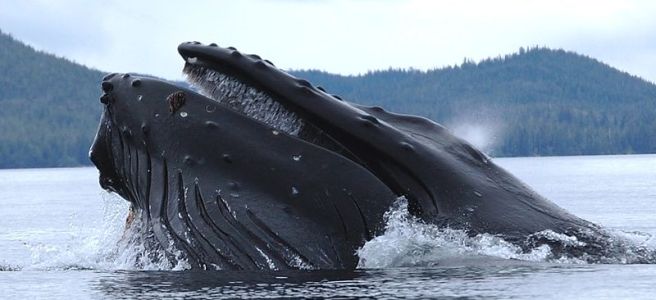
My freediving days are done, but singing songs about whaling has given me a different perspective. The ‘Right Whale’ is so named because whalers considered it to be the ‘right’ whale to hunt. A hideously cruel way to make a living? Maybe, but it was a very different and very tough world where a living had to be made somehow.

Modern science has given us a glimpse into the lives of these magnificent creatures. This song tells the whaling story from the victims perspective. It’s a difficult song to sing and a sure-fire way to kill the mood during a live gig…

Bonnie Ship the Diamond

In the words of another song “It’s a damn tough life full of toil and strife
We whalermen undergo”. For those aboard the Diamond during the 1830 disaster, the lyric was tragically applicable.

By the 1820s the relativity milder northern waters were depleted. Whalemen had to venture further into the Arctic, including Melville Bay in Northwest Greenland, in pursuit of the ‘Right Whale’.

In 1830, fifty British whaleships reached the grounds in early June, a month earlier than expected. The bay was packed with ice floes, which trapped most of the fleet in. Twenty ships were crushed and many whalermen froze or drowned.

Strike the Bell

Strike the Bell’ is a parody of ‘Ring the Bell, Watchman’ by Henry Clay Work. The original song dates back to the and of the American civil war c.1865. In this later version the crew are hoping that the second mate will end the shift by striking the bell. The barometer (glass) shows the the pressure dropping which coupled with the darkening sky indicates an impending storm.

The rhythm of ‘Strike the bell’ lends itself to being used as a ‘pumping shanty’, a task depicted in the Henry Scott Tuke painting ‘All Hands to the Pumps’.

Anyway, to the song!

The Leaving of Liverpool

Unlike many old folk songs, the origins of this forebitter are well recorded. The clipper ship ‘David Crockett was built in 1853 and was captained by John A. Burgess from Somerset from 1860, until he was swept overboard on 25 June 1874. The song lyric depicts Burgess as a tough skipper which was true and probably accounts for why the ship was noted for it’s speedy Atlantic crossings.

Anyway, enough history, now to the song! This version starts with a harmonica solo and my plan was to stick something hauntingly redolent of the times on the front, which would of course require a half decent harmonica virtuoso. I got my people to contact Stevie Wonder’s people, feeling fairly certain that he’d jump at the chance. Nevertheless, herewith, without a half decent harmonica player..

Sail Away Ladies

The origins of this old folk song are shrouded in mystery. The 1920’s version was an instrumental for fiddle made famous by virtuoso “Uncle Bunt” Stevens (1879-1951). As for the lyrics; maybe they originated in the British Isles in the 18th century, maybe they evolved from a negro spiritual or perhaps they’re a nod to the exploits of twelve Cape Cod women who braved the oceans. Whatever, today it’s a sea shanty and for me a chance to have a stab at acapella.

Sailing Over the Dogger Bank

A traditional shanty circa 1890, in need of some translation methinks..

Dogger Bank – treacherous fishing ground in the North Sea.

‘Give a sheet’ – slacken a rope attached to a sail, although the lyric could have been written ‘give a shit’, which you’d have to do whilst riding out a storm over the Dogger bank.

Twigger – young sailor (tell him enough times and he’ll ‘twig’ what you’re on about).

Ju-be-ju – could refer to a style of dance, reference to ships rigging or, in this case it’s likely to refer to a boat in a bad state of repair.

Shanghai roush – someone forced into service.

Roadstone Inspector – not a job exactly, more likely a by-product of too much alcohol and time spent face down in the gutter 🙂

Double Shuffle – a dance, circa 1883 or, given Jenny’s chosen career… ?

Knickerbocker Line – could refer to the Boston street-car service (mid 1800’s) or, possibly just a reference to Jenny’s baggy drawers.

Anyway, it’s a fun song to sing in the pub, beer in hand.. cheers! 🍻🎶

Lady Franklin’s Lament

The great thing about learning a folk song is that usually you don’t have to look hard to determine what the story is, which for me is where the problem starts.

A few years ago I started singing sea shanties with a bunch of mates (we call ourselves The Jurassix) and in our search for authentic (and not so authentic) songs, we unearthed all sorts of interesting gems including ‘Northwest Passage’ by Canadian Stan Rogers. Stan Rogers sings about early sea and land exploration and then jumps forward 300 years to his own ‘tardy’ effort. This hauntingly melancholy song references the great explorers including ‘the man who ate his boots’ John Franklin. Franklin’s attempt to find ‘the sea route to the orient’ is a dreadful tale about disease, starvation and possibly even cannibalism. It would be wrong to call it a failed mission though, since the subsequent exploration undertaken in an effort to find the doomed sailors resulted in the waters being charted, eventually leading to Norwegian Roald Amundsen making the first complete passage, from 1903 to 1906.

A few weeks ago I was talking with a couple of mates over several pints and we drifted into song lyrics. One of them said “have you had a go at ‘Lord Franklin”? He went on to enthuse about this song, so I took it on board.

The song is actually called ‘Lady Franklin’s Lament’ and it alludes to yet another part of the story. And, as an aside, through this song I’ve discovered ‘drop D’ tuning (thanks guys), which requires a bit of a faff, but adds a pleasing bass thump to the finger picking.

As I said at the outset, ‘you don’t have to look very hard to pick up a storyline’. The problem I have is that once a song takes hold I end up being seduced by the tune and enthralled by the lyrics until the next earworm manifests itself. Anyway, you know where this is going, so herewith…

The Wellerman

Everyone and his brother’s had a crack at this folksong. For me, trying to learn a new song is in itself a voyage of adventure and discovery. Working out what the lyrics mean can sometimes be a tad difficult, especially when the songwriter was self medicating on some serious ‘sxxt’ at the time and if asked, probably doesn’t have a clue either. However, in the case of The Wellerman’, an internet search quickly unearths the origins.

“The Weller Bros. was a Sydney Australia shore-whaling company that operated primarily along the southern coast of New Zealand from 1830 to 1840. Though they had numerous vessels in their employ, none appear to have been named the ‘Billy o’ Tea’ (pot for making tea obvs.). Anyone under the employ of the Weller Bros. were referred to as a Wellerman, but in the specific context of the song the Wellerman takes on the meaning of a supply ship sent by the company.

Tonguing refers to the tonguers, the part of a shore whaling team responsible for butchering the whale after it had been caught.”

Anyway, herewith, yet another version…